






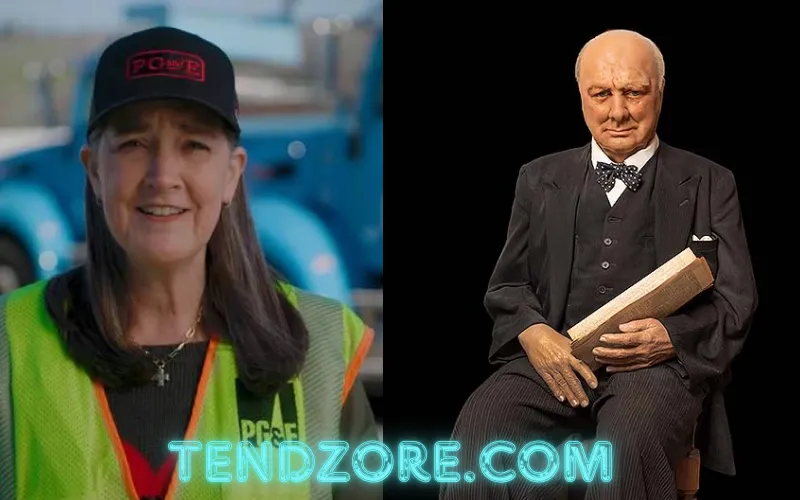
Patricia Poppe and Winston Churchill: Leadership, Influence, and Success
Leadership can take many different forms, depending on the challenges a person faces and the goals they want to achieve. Some leaders influence society through business, technology, and innovation, while others change history through politics, courage, and public service. Patricia Poppe and Winston Churchill represent two different generations of leadership, but their professional journeys offer valuable lessons about responsibility, determination, and the power of making important decisions.
Patricia Poppe is recognized for her leadership in the American energy industry. Through her work at major companies, including General Motors, DTE Energy, CMS Energy, and PG&E, she has developed a reputation as an experienced business executive. Her career reflects the importance of understanding operations, improving customer experiences, and preparing organizations for future challenges.
Winston Churchill, on the other hand, is remembered as one of Britain’s most influential political leaders. He became particularly famous for leading the country during World War II, when Britain faced serious military and political difficulties. His speeches, determination, and ability to encourage people during difficult times helped establish his place in modern history.
Although Patricia Poppe and Winston Churchill worked in completely different fields and lived in different historical periods, their stories provide an interesting comparison of leadership and influence. Their experiences demonstrate how strong leadership can shape organizations, communities, and even entire nations.
Quick Bio Table
| Details | Patricia Poppe | Winston Churchill |
| Full Name | Patricia K. Poppe | Sir Winston Leonard Spencer Churchill |
| Known As | Patti Poppe | Winston Churchill |
| Profession | Business Executive | Politician, Writer, Statesman |
| Industry | Energy and Utilities | Politics and Government |
| Nationality | American | British |
| Famous For | Leadership at PG&E and CMS Energy | Leadership during World War II |
| Education | Purdue University and Stanford University | Royal Military College, Sandhurst |
| Major Achievement | Leading major American energy companies | Leading Britain during World War II |
| Leadership Style | Operational and customer-focused | Strategic and inspirational |
| Legacy | Influence in the energy industry | Lasting influence on British and world history |
Who Is Patricia Poppe?
Patricia K. Poppe, widely known as Patti Poppe, is an American business executive recognized for her contributions to the energy and utility industries. She has built her career through years of experience in engineering, manufacturing, energy operations, and corporate management. Her professional journey shows how technical knowledge and practical business experience can create opportunities for leadership.
She became particularly well known after joining PG&E Corporation as its chief executive officer in January 2021. Before that appointment, she served as president and CEO of CMS Energy and its principal subsidiary, Consumers Energy. Her work in these positions involved managing large organizations, improving business operations, and developing strategies to provide reliable energy services to customers.
Poppe’s career is also notable because she successfully moved between different industries. She began working in the automotive sector before entering the energy business. This experience helped her understand how large organizations operate and how employees, technology, and management decisions contribute to overall performance.
Her professional story is an example of how determination, education, and continuous learning can help someone develop a successful career in a competitive business environment.
Patricia Poppe’s Early Life and Education
Education played an important role in shaping Patricia Poppe’s professional direction. She attended Purdue University, where she earned bachelor’s and master’s degrees in industrial engineering. Her academic background provided her with knowledge of manufacturing systems, production processes, and organizational efficiency.
Later, she continued her education at Stanford University’s Graduate School of Business, earning a master’s degree in management. This additional qualification helped strengthen her understanding of business strategy, leadership, and organizational development.
Her combination of engineering and management education became an important foundation for her career. Rather than focusing on only one area, she developed skills that connected technical operations with business decision-making.
Poppe’s educational journey also highlights the value of developing different abilities over time. Engineering knowledge can help professionals understand complicated systems, while management education provides the tools needed to guide teams and make long-term decisions.

Patricia Poppe’s Professional Career
Beginning Her Career at General Motors
Patricia Poppe started her professional career at General Motors, one of the major automobile manufacturers in the United States. She spent approximately 15 years working in different management and operational positions within the company.
Her responsibilities involved manufacturing operations, production planning, and improving workplace performance. These roles provided valuable experience in managing large teams and understanding the challenges associated with industrial production.
Working in the automotive industry also helped her develop a practical approach to leadership. Manufacturing companies depend on efficiency, teamwork, quality control, and careful planning. Understanding these areas gave Poppe professional skills that later became useful in the energy sector.
Her experience at General Motors established the foundation for her transition into more senior leadership positions.
Moving Into the Energy Industry
After working in the automotive sector, Poppe moved to DTE Energy in 2005. She served in management positions, including director-level responsibilities connected with power plant operations and energy optimization.
This career transition introduced her to a different industry with its own technical, financial, and operational challenges. Energy companies must maintain reliable services while managing infrastructure, employee safety, customer expectations, and changing industry requirements.
Her experience at DTE Energy helped her gain a deeper understanding of electricity generation and utility operations. It also prepared her for the next major stage of her professional journey at Consumers Energy.
Leadership at CMS Energy and Consumers Energy
In 2011, Poppe joined Consumers Energy, a major energy provider in Michigan. During her time with the company, she held several important leadership positions involving customer experience, operations, engineering, and energy distribution.
Her responsibilities gradually increased, allowing her to develop a broader understanding of the company’s operations. In 2015, she became senior vice president of distribution operations, engineering, and transmission.
In 2016, Poppe was appointed president and chief executive officer of CMS Energy and Consumers Energy. This was a significant achievement in her career because she became responsible for guiding a large energy organization and managing its long-term business priorities.
During this period, she emphasized customer service, operational improvements, workplace safety, and modern business practices. Her leadership helped strengthen her reputation as an executive who understood both the technical and human sides of business management.
Becoming CEO of PG&E
One of the most important developments in Patricia Poppe’s career came when PG&E Corporation appointed her as its chief executive officer, effective January 4, 2021.
PG&E provides electricity and natural gas services to millions of people across Northern and Central California. Leading such a large organization involves significant responsibilities, particularly in areas such as infrastructure, customer service, energy reliability, and wildfire safety.
Poppe’s appointment brought her experience from General Motors, DTE Energy, and CMS Energy into a company facing important operational and public trust challenges.
Her leadership approach has focused on improving business processes, strengthening safety practices, reducing unnecessary operational costs, and developing a better customer experience. These priorities are especially important for energy providers because their services directly affect households, businesses, and communities.
Her position at PG&E represents a major achievement in her professional journey and demonstrates the value of combining technical experience with executive leadership.
Who Was Winston Churchill?
Winston Churchill was a British politician, writer, military officer, and statesman who became one of the most recognized figures in twentieth-century history. He was born on November 30, 1874, at Blenheim Palace in Oxfordshire, England.
Churchill grew up in an aristocratic family and received his education at several schools before attending the Royal Military College at Sandhurst. After completing his military training, he joined the British Army and gained experience as a soldier and journalist.
His early experiences took him to different parts of the world, including India, Cuba, and South Africa. These journeys helped develop his interest in military affairs, international politics, and public communication.
Churchill eventually entered British politics and became a member of Parliament in 1900. Over the following decades, he held several important government positions and developed a reputation as a strong political speaker.
However, his greatest historical recognition came during World War II, when he became Britain’s prime minister in 1940. His leadership during one of the most dangerous periods in British history made him an important figure in international politics.
Winston Churchill’s Political Career and Achievements
Early Political Development
Churchill began his political career as a Conservative member of Parliament representing Oldham in 1900. A few years later, he joined the Liberal Party and continued building his political experience.
Throughout his early career, he held several government positions, including president of the Board of Trade and home secretary. He also served as First Lord of the Admiralty, where he became involved in important naval and military decisions.
His political journey was not always successful. The disastrous Gallipoli campaign during World War I damaged his reputation and forced him to leave his position at the Admiralty.
Nevertheless, Churchill continued working in politics and gradually returned to important government responsibilities. His career demonstrates that even influential leaders can experience serious professional setbacks.

Becoming Prime Minister During World War II
In May 1940, Winston Churchill became prime minister of the United Kingdom after Neville Chamberlain resigned.
Britain was facing an extremely difficult situation. Nazi Germany had expanded its military power across Europe, and the possibility of a German invasion created widespread fear.
Churchill took responsibility for leading the country during this dangerous period. He understood that maintaining public confidence was just as important as making military and political decisions.
His speeches became an important part of his leadership. Through powerful language and confident communication, he encouraged British citizens to remain determined despite the challenges of war.
His leadership also involved working with international allies, including the United States and the Soviet Union, to oppose Nazi Germany. These relationships became an important part of the Allied war effort.
His Role in the Allied Victory
Churchill played a major political and strategic role in the Allied effort during World War II. He worked closely with other world leaders to coordinate military objectives and discuss the future of Europe.
His relationship with American President Franklin D. Roosevelt was particularly important. Their discussions helped strengthen cooperation between Britain and the United States.
The war required difficult decisions, careful diplomacy, and the ability to manage uncertainty. Churchill became an important public symbol of British resistance during this period.
Germany surrendered in May 1945, bringing the war in Europe to an end. Although Churchill’s party lost the British general election that year, his contribution to the wartime effort remained an important part of his historical legacy.
Later Years and Historical Recognition
Churchill returned to the position of prime minister in 1951 and remained in office until 1955. His second term focused on domestic government responsibilities and international relations during the developing Cold War.
Beyond politics, he was also an accomplished writer. In 1953, he received the Nobel Prize in Literature in recognition of his historical and biographical writing as well as his public speaking.
Churchill died on January 24, 1965, in London. He received a state funeral, reflecting his importance in British public life.
His speeches, books, political decisions, and wartime leadership continue to be studied by historians, students, and leadership experts.
Patricia Poppe and Winston Churchill: Different Leadership Styles
When examining Patricia Poppe and Winston Churchill together, one of the most interesting subjects is the difference between their leadership styles.
Poppe’s leadership is connected with business management, energy services, and organizational improvement. Her responsibilities involve managing employees, improving company operations, developing strategies, and delivering essential services to customers.
Churchill’s leadership developed in a political and military environment. His responsibilities included guiding a nation through war, managing international relationships, and maintaining public confidence during a period of uncertainty.
Despite these differences, both demonstrate the importance of understanding challenges before making important decisions.
Poppe’s professional experience shows how leaders can improve organizations through practical knowledge and effective management. Churchill’s historical experience demonstrates how communication, determination, and strategic thinking can influence people during national emergencies.
Their careers also highlight the importance of adaptability. Successful leadership requires understanding the situation, recognizing changing circumstances, and adjusting decisions when necessary.
The Influence of Patricia Poppe on the Energy Industry
Patricia Poppe’s influence comes from her ability to connect engineering knowledge with executive management. The energy industry is changing because of new technology, environmental concerns, customer expectations, and the growing demand for reliable electricity.
As a senior executive, she has worked in organizations responsible for providing essential energy services to large populations. Her experience includes managing distribution systems, improving customer relationships, and developing operational strategies.
Her work at PG&E is particularly important because energy providers face complicated responsibilities. They must maintain infrastructure, improve safety, control costs, and prepare for future energy needs.
Poppe’s career also represents progress for women in corporate leadership. She became the first woman to serve as CEO of two Fortune 500 companies, according to Purdue University. This achievement highlights the opportunities that can develop when professional knowledge, experience, and leadership abilities come together.
Winston Churchill’s Influence on World History
Winston Churchill’s influence extends far beyond his years in government. His leadership during World War II helped shape Britain’s response to Nazi Germany and contributed to the wider Allied effort.
One of the most important parts of his legacy is his ability to communicate during difficult circumstances. His speeches encouraged people to remain hopeful and determined when the future appeared uncertain.
Churchill also influenced international politics through his relationships with other major leaders. His wartime cooperation with Roosevelt and Joseph Stalin helped establish important diplomatic connections among the Allied powers.
However, his historical legacy is complex. Some of his political views and decisions, particularly concerning Britain’s empire and colonial rule, remain controversial and are widely debated by historians.
Understanding his influence therefore requires looking at both his achievements and the criticism surrounding his political record.
Frequently Asked Questions (FAQs)
1. Who is Patricia Poppe?
Patricia Poppe, also known as Patti Poppe, is an American business executive known for her leadership in the energy industry and her role as CEO of PG&E Corporation.
2. Who was Winston Churchill?
Winston Churchill was a British politician, writer, and statesman who served as prime minister during World War II. He is remembered for his leadership and powerful speeches.
3. What is Patricia Poppe famous for?
Patricia Poppe is famous for her executive career at General Motors, DTE Energy, CMS Energy, and PG&E. She is recognized for her experience in business operations and energy management.
4. What was Winston Churchill’s greatest achievement?
One of Churchill’s most important achievements was leading Britain during World War II. His determination, communication skills, and political decisions helped maintain public confidence during a difficult period.
5. Where did Patricia Poppe receive her education?
Patricia Poppe studied industrial engineering at Purdue University and later earned a master’s degree in management from Stanford University’s Graduate School of Business.
6. When did Winston Churchill become Britain’s prime minister?
Winston Churchill became prime minister of the United Kingdom on May 10, 1940, during the early stages of World War II.
7. What leadership qualities did Patricia Poppe and Winston Churchill share?
Both demonstrated determination, adaptability, strategic thinking, and the ability to manage challenging situations. However, their leadership styles developed in very different professional environments.
8. Why are Patricia Poppe and Winston Churchill important figures?
Patricia Poppe is recognized for her contributions to the American energy industry, while Winston Churchill is remembered for his political leadership during World War II. Their careers offer different perspectives on leadership, influence, and professional success.
Conclusion
Patricia Poppe and Winston Churchill represent two very different examples of leadership, influence, and professional achievement. Poppe has developed a successful career in engineering, business management, and the American energy industry. Her work at General Motors, DTE Energy, CMS Energy, and PG&E demonstrates the importance of technical knowledge, customer-focused management, and organizational improvement.
Churchill remains an important historical figure because of his political career and leadership during World War II. His determination, public speeches, and international diplomacy helped shape Britain’s response to one of the most challenging periods in modern history.
Although their professional paths never represented the same industry or historical circumstances, their stories offer valuable lessons about responsibility, adaptability, and determination. Together, their experiences show that influential leadership can take many forms and that meaningful success comes from the ability to face challenges and make a lasting contribution.
For more interesting stories and biographies, visit tend zore to explore more.