







Celebrities With Buffalo Hump: What You Should Know
Changes in physical appearance often attract public attention, especially when they involve well-known celebrities. Fans regularly compare photographs of famous personalities from different years and notice changes around their neck, shoulders, and upper back. One physical feature that sometimes becomes a topic of online discussion is a buffalo hump. It refers to a noticeable accumulation of fat at the base of the neck, between the shoulders. Although the feature can appear in different people, its presence does not automatically indicate a serious medical condition.
Online searches for celebrities with buffalo hump often come from people who want to understand why this feature develops and whether it is connected to weight gain, aging, thyroid problems, or other health conditions. Some people also search for before-and-after photographs, possible treatments, and exercises that may improve the appearance of the upper back. However, photographs alone cannot explain someone’s medical condition, and making health assumptions about public figures can easily lead to misinformation.
Understanding the medical facts behind a buffalo hump is more useful than relying on celebrity pictures or internet rumors. Several factors can contribute to changes in the upper-back area, including fat distribution, posture, hormonal conditions, and certain medications. This article explores the possible causes, common misconceptions, treatment options, and the difference between a buffalo hump and other types of neck posture problems.
Quick Overview of Buffalo Hump
| Category | Details |
| Medical term | Dorsocervical fat pad |
| Common name | Buffalo hump |
| Location | Base of the neck and upper back |
| Main appearance | Rounded fatty area between the shoulders |
| Possible causes | Fat distribution, hormonal conditions, medications, and other medical factors |
| Related conditions | Cushing’s syndrome and certain metabolic conditions |
| Treatment | Depends on the underlying cause |
| Possible options | Medical treatment, lifestyle changes, and selected surgical procedures |
What Is a Buffalo Hump?
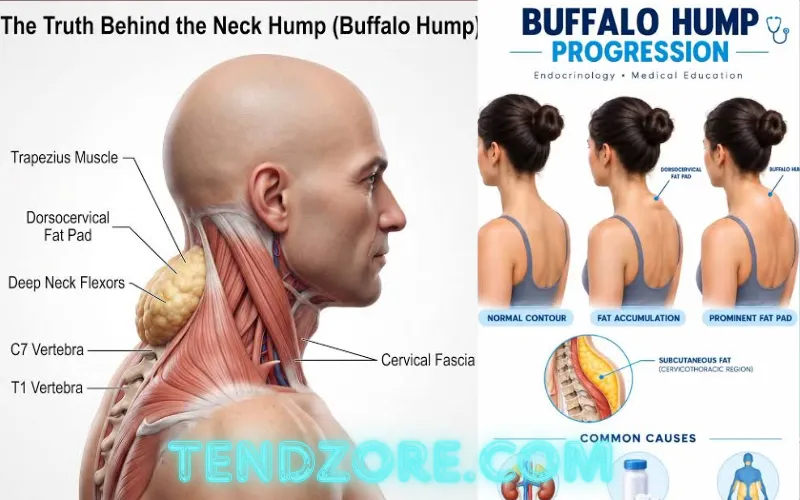
A buffalo hump refers to an unusual accumulation of fat in the upper-back area, just below the neck and between the shoulders. Medical professionals call this a dorsocervical fat pad, and its size and appearance can vary from person to person commonly refer to this area as a dorsocervical fat pad. It may appear as a rounded or raised area that changes the natural shape of the neck and upper back. Some people notice it gradually, while others become aware of it after gaining weight or experiencing changes in their health.
The size and appearance of this area can vary from person to person. In some cases, it is relatively small and barely noticeable. In others, the fat accumulation becomes more prominent and may affect the person’s comfort, posture, or confidence. Although the name sounds unusual, a buffalo hump is a medical description rather than a diagnosis of a particular disease.
People searching for celebrities with buffalo hump sometimes assume that every visible bump near the neck represents the same condition. However, this is not always true. A similar appearance can result from different causes, including excessive fat accumulation, spinal changes, and postural problems. A medical professional can help identify the actual reason through an examination and, when necessary, additional testing.
Why Does a Buffalo Hump Develop?
There is no single explanation for every case of buffalo hump. The condition can develop because of changes in how the body stores fat, certain hormonal disorders, long-term medication use, or other health-related factors. Understanding these possibilities is important because the correct treatment depends on identifying the underlying cause.
Fat Distribution and Weight Changes
One possible reason for a buffalo hump is the way the body stores fat. Some individuals naturally accumulate more fatty tissue around their neck and upper back. Significant weight gain may also make this area more noticeable, although not everyone who gains weight develops a dorsocervical fat pad.
Genetics, age, and individual differences in body composition can influence where fat accumulates. This means that two people with similar body weights may have completely different upper-back appearances. Weight management can sometimes improve the appearance of fat accumulation, but it does not address every possible cause.

Hormonal Imbalances
Hormones play an important role in regulating metabolism, fat storage, and other body functions. Certain hormonal conditions can change how fat is distributed throughout the body. One example is Cushing’s syndrome, which occurs when the body experiences prolonged exposure to excessive cortisol.
People with this condition may develop increased fat around the face, abdomen, and upper back. However, a buffalo hump by itself is not enough to confirm Cushing’s syndrome. Other symptoms and appropriate medical tests are necessary to establish a diagnosis.
Medication-Related Causes
Long-term use of corticosteroid medications can sometimes contribute to changes in body fat distribution. These medicines are prescribed for several medical conditions, including inflammatory and autoimmune disorders. When used at high doses or for extended periods, they can cause side effects involving weight gain and fat accumulation.
Anyone concerned about medication-related changes should speak with a healthcare professional. Stopping prescribed corticosteroids suddenly can be dangerous, so treatment adjustments should always happen under medical supervision.
Cushing’s Syndrome and Buffalo Hump
Cushing’s syndrome is one of the medical conditions most commonly associated with a buffalo hump. It develops when the body has excessive cortisol for an extended period. Cortisol is a hormone produced by the adrenal glands that helps regulate stress responses, blood pressure, metabolism, and inflammation.
People with Cushing’s syndrome may experience several physical changes. These can include a rounded face, increased fat around the abdomen, thinner arms and legs, easy bruising, muscle weakness, and purple stretch marks. A fatty deposit between the shoulders may also develop.
Searches for cushing’s syndrome celebrities with buffalo hump often connect celebrity photographs with this medical condition. However, there is an important difference between discussing a medical possibility and claiming that a particular person has a diagnosed disorder. Unless a celebrity has publicly confirmed a diagnosis or reliable medical information is available, it would be inappropriate to identify them as someone with Cushing’s syndrome based on appearance.
Thyroid Conditions and Buffalo Hump
Thyroid disorders are another topic that frequently appears in searches about upper-back fat accumulation. The thyroid gland helps regulate metabolism and influences several important body functions. When it produces too little or too much thyroid hormone, a person may experience changes in energy levels, body weight, and metabolism.
Hypothyroidism, for example, can contribute to weight gain in some individuals. However, a buffalo hump is not a typical defining symptom of thyroid disease. Someone with a noticeable fat pad should not automatically assume that a thyroid problem is responsible.
Searches for thyroid celebrities with buffalo hump reflect public curiosity about the relationship between thyroid health and physical appearance. Nevertheless, there is no reliable way to diagnose a thyroid condition by looking at photographs. Blood tests and medical assessments are needed to evaluate thyroid function.
Celebrities with Buffalo Hump: Separating Facts from Online Speculation
Celebrity photographs are frequently shared across social media platforms, where people compare physical appearances and discuss possible health explanations. Images taken from different angles, lighting conditions, and camera positions can make the neck and upper-back area look different. Clothing, hairstyles, posture, and natural body changes can also influence how a person’s appearance is perceived.
Although searches for female celebrities with buffalo hump and other related terms continue to attract attention, there is no medically verified public list of celebrities diagnosed with this condition. A visible bump in a photograph does not establish that someone has a dorsocervical fat pad, Cushing’s syndrome, or another medical disorder.
It is also important to remember that celebrities deserve the same medical privacy as everyone else. Unless someone openly discusses their diagnosis, online articles should avoid presenting speculation as established fact.
Buffalo Hump vs. Dowager’s Hump
A common source of confusion is the difference between a buffalo hump and a dowager’s hump. Both can create a noticeable raised area around the base of the neck, but they do not necessarily have the same cause.
A buffalo hump generally refers to an accumulation of fatty tissue in the dorsocervical area. A dowager’s hump, on the other hand, is commonly associated with a forward-rounded upper back caused by changes in spinal posture or structure. In some cases, vertebral compression fractures and osteoporosis can contribute to this appearance.
People searching for dowager celebrities with buffalo hump may be using the terms to describe similar-looking features. However, distinguishing between fat accumulation and spinal curvature is important because the appropriate treatment can be very different.
How Is a Buffalo Hump Diagnosed?
A healthcare professional usually begins by examining the shape and location of the raised area. They may ask when it first appeared, whether it has increased in size, and whether the person has experienced weight changes or other symptoms.
Medical history is also important. The doctor may ask about medication use, particularly corticosteroids, and any symptoms that could suggest a hormonal condition. Depending on the findings, blood tests may be recommended to evaluate cortisol levels or thyroid function.
In certain situations, imaging tests may help distinguish fatty tissue from changes in the spine. An accurate diagnosis is important because treating the wrong condition may not improve the problem and could delay appropriate medical care.
Treatment Options for Buffalo Hump
Treatment depends on what is causing the fat accumulation or raised appearance. There is no single solution that works for everyone. Some people may benefit from treating an underlying hormonal disorder, while others may need support with weight management, posture, or selected medical procedures.
Lifestyle Changes and Weight Management
When excess body fat contributes to a dorsocervical fat pad, gradual weight management may help improve its appearance. A balanced diet, regular physical activity, and consistent healthy habits can support overall body composition.
However, it is important to understand that fat cannot be selectively removed from one specific body area through dieting. Even when someone loses weight, the amount of change around the upper back can vary.
Exercises for Neck and Upper-Back Posture
People searching for exercises celebrities with buffalo hump are often looking for simple ways to improve the appearance of their neck and shoulders. Although exercise cannot directly eliminate a hormonal fat pad, posture-focused movements can help strengthen supporting muscles and reduce stiffness.
Chin tucks, gentle shoulder-blade squeezes, chest stretches, and upper-back mobility exercises may help improve forward-head posture. These movements are particularly useful for people who spend extended periods sitting at desks or looking down at mobile devices.
Consistency matters more than performing complicated routines. Exercises should be comfortable and controlled. Anyone experiencing pain, numbness, weakness, or significant spinal changes should seek professional advice before starting a new exercise program.
Medical Treatment for Underlying Conditions
If a buffalo hump develops because of Cushing’s syndrome or another hormonal condition, treating the underlying disorder is essential. Depending on the cause, treatment may involve medication adjustments, prescription medicines, or specialized medical procedures.
For medication-related fat accumulation, doctors may review the current treatment plan and consider alternatives when medically appropriate. Patients should never stop important medication without professional guidance.

Can Buffalo Hump Be Removed With Surgery?
Some people consider cosmetic procedures when a prominent fat pad affects their appearance or confidence. Searches for hump removal celebrities with buffalo hump often reflect interest in surgical transformations and possible treatment results.
In selected cases, doctors may recommend liposuction to remove excess fatty tissue. This procedure involves using a thin tube to remove fat from a targeted area. However, it is not suitable for everyone, and the results depend on the nature of the underlying condition.
People also search for lipo celebrities with buffalo hump because liposuction is sometimes discussed as a possible cosmetic solution. It is important to understand that surgery does not correct hormonal imbalances, medication-related causes, or spinal problems. If the underlying issue remains untreated, the fat accumulation may return.
A qualified medical professional should evaluate the area before any cosmetic procedure. The potential benefits, risks, recovery period, and long-term expectations should all be discussed before making a decision.
Common Misconceptions About Buffalo Hump
One of the biggest misconceptions is that every raised area behind the neck is a buffalo hump. In reality, similar appearances can have different explanations, including fat accumulation, spinal curvature, and posture-related changes.
Another misunderstanding is that the condition always indicates a serious hormonal disorder. Although Cushing’s syndrome is an important possible cause, many people with a dorsocervical fat pad do not have this condition.
There is also a belief that special exercises can completely remove the fat. Exercise can improve muscle strength and posture, but it cannot guarantee the removal of localized fat caused by hormonal changes or medication use.
Celebrity comparisons create another problem. People sometimes assume that a public figure has undergone surgery or has a particular health condition because their appearance changes between photographs. Such conclusions are unreliable without confirmation from the individual or trustworthy medical information.
When Should Someone See a Doctor?
A newly developed or gradually increasing lump around the neck and upper back deserves medical attention, particularly when it appears alongside other physical changes. A healthcare professional can determine whether the area consists of fatty tissue, a structural spinal change, or another type of swelling.
Medical evaluation is especially important when the change is accompanied by unexplained weight gain, muscle weakness, easy bruising, unusual stretch marks, or changes in blood pressure. These symptoms may indicate an underlying condition that needs proper investigation.
Early evaluation can help identify the cause and guide appropriate treatment. Rather than relying on internet comparisons or celebrity photographs, individuals should seek advice based on their own symptoms and medical history.
Frequently Asked Questions
1. What is a buffalo hump, and why does it develop?
A buffalo hump is an accumulation of fatty tissue at the base of the neck, between the shoulders. It may develop because of hormonal conditions, medication use, changes in fat distribution, or other health-related factors.
2. Which celebrities have a buffalo hump?
There is no medically verified public list of celebrities diagnosed with a buffalo hump. Photographs alone cannot confirm whether a public figure has this condition or another health-related issue.
3. Is a buffalo hump a sign of Cushing’s syndrome?
A buffalo hump can be associated with Cushing’s syndrome, a condition involving excessive cortisol levels. However, having a raised area behind the neck does not automatically mean someone has this disorder.
4. Can thyroid problems cause a buffalo hump?
Thyroid disorders can contribute to weight changes and affect metabolism, but a buffalo hump is not a typical defining symptom of thyroid disease. Medical testing is necessary to identify the actual cause.
5. Can exercises remove a buffalo hump?
Exercises such as chin tucks, shoulder-blade squeezes, and upper-back stretches can improve posture and muscle strength. However, they cannot directly eliminate a fatty deposit caused by hormonal changes or medication use.
6. Is a buffalo hump the same as a dowager’s hump?
No, they are not necessarily the same. A buffalo hump generally involves fatty tissue accumulation, whereas a dowager’s hump is commonly associated with changes in spinal posture or structure.
7. Can liposuction remove a buffalo hump permanently?
Liposuction may reduce excess fatty tissue in selected cases. However, results depend on the underlying cause, and the fat may return if the medical condition responsible for its development remains untreated.
8. When should someone see a doctor about a buffalo hump?
A person should consult a healthcare professional if a bump develops or increases in size, particularly alongside unexplained weight gain, muscle weakness, easy bruising, or other unusual symptoms. A proper examination can help identify the cause and determine suitable treatment.
Final Thoughts
Buffalo hump is a physical feature that can develop for several different reasons, including fat distribution, hormonal conditions, medication use, and other health-related factors. Although searches for celebrities with buffalo hump generate interest, there is no reliable way to diagnose a public figure from photographs alone.
Understanding the differences between a dorsocervical fat pad, Cushing’s syndrome, thyroid-related concerns, and posture problems can help people avoid common misunderstandings. Treatments also vary depending on the underlying cause, ranging from medical management and lifestyle changes to selected cosmetic procedures.
The most important point is that a noticeable change around the neck should be understood through accurate medical information rather than online speculation. Every person’s body is different, and a proper medical assessment is the best way to determine what is happening and which treatment may be appropriate.
For more interesting stories and biographies, visit tend zore to explore more.