






The phrase sacred cow carries a much deeper meaning than its two simple words suggest. In everyday English, it can describe an idea, tradition, person, organization, or institution that people are reluctant to question. In another context, it points toward the long-standing cultural and religious respect for cattle in India, particularly within Hindu traditions. The same phrase is also used for books, documentaries, restaurants, food brands, creative companies, and even business projects. Because of these different uses, someone searching for the term may be looking for a definition, its religious origins, a famous book or film, or a place such as the Sacred Cow Tavern in Iowa.
Understanding the expression therefore requires looking at both its literal and figurative meanings. The religious background explains why the image of a revered cow became so powerful, while the modern idiom shows how that image developed into a metaphor for something considered almost untouchable. Over time, the phrase has traveled far beyond its original cultural setting and become part of everyday business, political, social, and popular language.
Quick Facts About Sacred Cow
| Topic | Quick Information |
| Main meaning | Something treated as too important or protected to question |
| Religious connection | Strongly associated with the traditional reverence for cattle in Hindu culture |
| Common idiom | Used for people, beliefs, traditions, policies, or institutions that receive special protection from criticism |
| Business meaning | Can describe an untouchable project, policy, or executive initiative |
| Famous book | Sacred Cow: The Case for (Better) Meat |
| Documentary | Sacred Cow: The Nutritional, Environmental and Ethical Case for Better Meat |
| Restaurant example | Sacred Cow Tavern in Cedar Rapids, Iowa |
| Food brand example | Sacred Cow Granola |
| Broader significance | A phrase connecting religion, language, business, food, and popular culture |
What Does Sacred Cow Mean?
The most common sacred cow meaning is figurative. When people call something a sacred cow, they mean that it is regarded as so important, respected, or politically sensitive that ordinary criticism is discouraged. The expression can apply to almost anything. A company might have a policy that nobody wants to challenge. A political party might defend a long-standing idea even when circumstances have changed. A family might preserve an old tradition simply because it has always been done that way.
The important part of the expression is not necessarily that the protected thing is good. In fact, calling something a sacred cow can sometimes suggest the opposite. The speaker may believe that the idea deserves closer examination but cannot be questioned because of tradition, loyalty, fear, influence, or emotional attachment.
For example, imagine a company using the same software system for twenty years. The system is expensive, slow, and difficult to maintain, but senior managers refuse to replace it because the founder originally approved it. Employees might privately describe that software as a sacred cow. The phrase communicates the idea that the system has become protected from normal decision-making.
This is why the sacred cow has become such a useful metaphor. It describes something that appears to operate under different rules from everything around it.
Where Did the Sacred Cow Expression Come From?
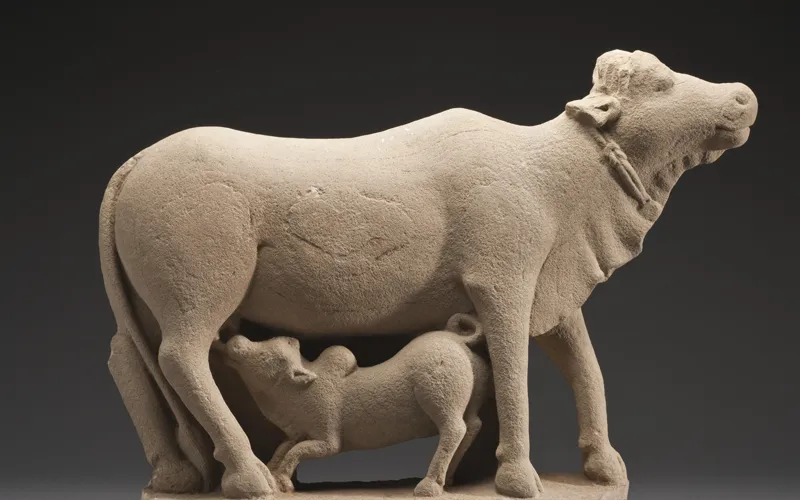
The origins of the expression are closely connected with Western observations of the cultural and religious importance of cattle in India. Cows have held a respected position in Indian society for centuries, and their importance developed through religious beliefs, agricultural life, ideas about non-violence, and their practical contribution to communities.
It is important, however, to avoid reducing Hindu beliefs to the simple statement that Hindus “worship cows.” That description is too simplistic. The cow is generally revered as a symbol associated with nourishment, generosity, motherhood, life, and non-violence. Different Hindu traditions and communities understand the symbolism in different ways.
The modern English expression eventually borrowed this powerful image. If an animal is treated with extraordinary respect and protection, the metaphor suggests that another thing receiving unusually strong protection is also a “sacred cow.” In English, the phrase gradually became a way to criticize ideas or institutions that people believed had become immune to questioning.
The expression therefore has two connected but distinct meanings. One relates to an actual cultural and religious tradition, while the other is an English-language metaphor used in everyday conversation.
Sacred Cow and Hinduism
The relationship between the cow and sacred cow Hinduism is one of the most recognizable examples of religious symbolism associated with India. Cattle have traditionally been valuable to agricultural communities because they provide milk and other useful resources and contribute to rural life. Their economic and practical importance became intertwined with religious and cultural ideas.
The cow is often associated with motherhood because of the nourishment provided by milk. This symbolism gives the animal a special place in traditional thought. The expression Gau Mata, meaning “Mother Cow,” reflects this maternal association in some Hindu traditions.
Cows are also connected with important figures in Hindu mythology. Krishna is famously associated with cows and is often portrayed as a cowherd. The sacred bull Nandi, meanwhile, is closely connected with Shiva. These associations have helped strengthen the presence of cattle in Hindu religious imagery.
Another important concept is ahimsa, or non-violence. Ahimsa has played a major role in Indian philosophical and religious traditions, although its interpretation and practice vary between communities. The cow became a particularly strong symbol of harmlessness and generosity within Hindu culture.
Traditional uses of cow-derived products have also existed in some religious practices. Milk, curd, ghee, dung, and urine have historically been grouped together in the concept known as panchagavya. Their ritual and agricultural uses belong to particular traditional contexts and should not be treated as universal practices followed by every Hindu person today.
Sacred Cow as a Modern English Idiom
In modern English, the religious background is often less important than the metaphor. People use the phrase when they want to point out that something is protected from criticism.
A company might have a famous product that no longer performs well but receives unlimited support because it has emotional importance to senior executives. A university might have a decades-old tradition that consumes money but is never seriously reviewed. A government program might continue year after year because politicians consider it too controversial to reform.
In all these situations, the phrase suggests an imbalance. Normal ideas are expected to face questions, evidence, competition, and evaluation. A sacred cow, by contrast, receives special treatment.
This makes the expression especially useful in discussions about organizational culture. It allows someone to identify a problem without necessarily naming the personal or political reasons behind it.
Sacred Cow in Project Management
The phrase becomes particularly interesting when used in business. Sacred cow in project management usually describes a project or initiative that continues receiving resources despite weak results because an influential person strongly supports it.
A sacred cow project may have started as an executive’s favorite idea. Instead of being selected because of strong customer demand, financial evidence, or strategic value, it may have been approved because a senior leader wanted it. Once significant time and money have been invested, stopping the project can become politically difficult.
This is where sacred cow project management becomes a serious organizational issue. A project should normally be evaluated according to factors such as business value, cost, risk, customer needs, timelines, and strategic alignment. When one initiative is protected from those standards, the organization can lose valuable resources.
A project can miss deadlines repeatedly without facing cancellation. Its budget can increase while its expected benefits remain unclear. Team members may notice problems but hesitate to speak openly because they know the project has powerful supporters. Over time, the initiative can become more about protecting the original decision than delivering useful results.
So, what is sacred cow in project management? In simple terms, it is an initiative that has become unusually difficult to challenge or cancel because of personal influence, organizational politics, tradition, or executive attachment.
Why Sacred Cow Projects Can Hurt Businesses
The biggest problem with an untouchable project is opportunity cost. Every project consumes some combination of money, employee time, technology, management attention, and organizational energy. If those resources remain locked inside an underperforming initiative, they cannot easily be redirected toward stronger opportunities.
There can also be a cultural cost. When employees repeatedly see evidence ignored, they may stop believing that performance data matters. They can learn that pleasing influential people is more important than telling the truth. This creates an environment in which problems are hidden rather than solved.
A protected project can also damage morale. Skilled employees generally want to work on projects that have a clear purpose and measurable impact. If they believe an initiative exists mainly because someone powerful wants it, motivation can decline.
The best way to challenge such a situation is usually through objective evaluation rather than personal confrontation. Instead of saying that an executive’s idea is bad, managers can compare the project’s current performance with its original goals, costs, customer feedback, risks, and expected benefits. A neutral review can make difficult decisions easier.
The Sacred Cow Book and the Debate About Meat
The phrase also appears in food and environmental discussions. One of the best-known modern uses is Sacred Cow: The Case for (Better) Meat, associated with Diana Rodgers and Robb Wolf. The book challenges some common assumptions surrounding meat, nutrition, livestock farming, and environmental sustainability.
The authors argue that the discussion about meat should be more nuanced than simply asking whether meat is good or bad. Their argument focuses heavily on how animals are raised and how farming systems affect soil, ecosystems, nutrition, and human health.
The central idea is often summarized through the phrase “It’s not the cow, it’s the how.” The argument distinguishes between different forms of livestock production rather than treating every type of beef production as identical.
The book has generated interest partly because it challenges popular narratives about red meat and sustainability. Supporters see it as an important contribution to the conversation about regenerative agriculture and food systems, while critics have questioned some of its conclusions and broader claims. As with any controversial nutrition or environmental subject, readers benefit from examining evidence from multiple perspectives.
The Sacred Cow Documentary
The same project inspired the Sacred Cow documentary, which explores nutritional, environmental, and ethical arguments surrounding meat production. The film presents the case that properly managed livestock can have a different environmental impact from highly industrialized forms of agriculture.
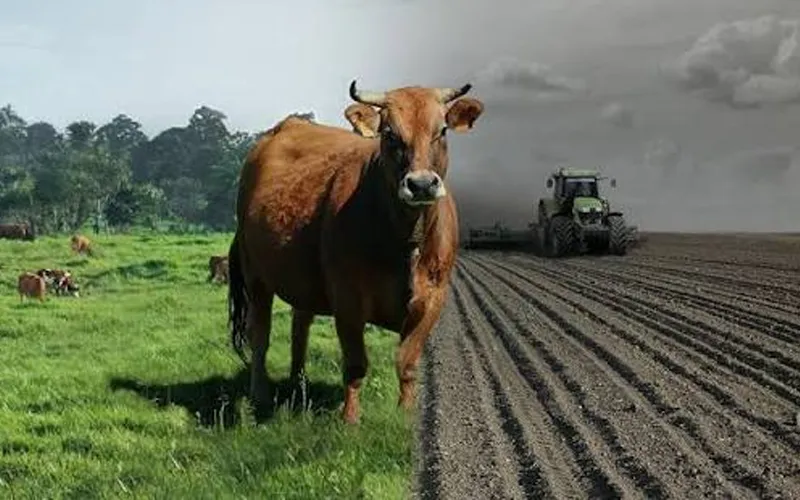
A major focus is regenerative agriculture. This approach can involve carefully managed grazing systems intended to improve soil health, support plant growth, and work with natural ecological processes. The documentary presents these ideas as part of a broader argument that cattle should not automatically be treated as the central environmental problem.
The film also discusses the ethical dimension of food production. Rather than presenting the debate as a simple choice between eating meat and protecting nature, it asks viewers to consider how different agricultural systems affect land, animals, ecosystems, and people.
The documentary has therefore become another example of how the phrase can move from its original cultural meaning into a modern debate about food and environmental policy.
Sacred Cow Tavern in Cedar Rapids
Not every search for the phrase is about religion or business. Some people are looking for a restaurant. The Sacred Cow Tavern is a neighborhood bar and casual eatery in Cedar Rapids, Iowa, in the Oak Hill Jackson area near the NewBo District.
The location has an unusual history. The historic building has reportedly served different purposes over the years, including use as a grocery store, church, disco, and nightclub. Its later renovation gave the space a distinctive identity that fits the casual “fun not fancy” concept associated with the restaurant group behind it.
The atmosphere is one of the reasons people search for Sacred Cow Tavern photos. Its interior has playful details rather than a formal restaurant design. Among the memorable features are unusual lighting and a cow decoration suspended from the ceiling, giving the tavern a personality that matches its name.
For visitors researching Sacred Cow Cedar Rapids, the restaurant offers a menu centered around casual comfort food. Its burgers, including varieties such as the Floyd Pepper and Poutine Burger, are among the recognizable choices. The menu also includes dishes such as dill pickle soup, cheese curds, gyros, sandwiches, and other pub-style foods.
The restaurant is also known for offering vegetarian, vegan, and gluten-free choices. Because menus and operating details can change, visitors should check the tavern’s current information before making a trip.
Other Businesses Called Sacred Cow
The popularity of the phrase means that it appears in many different business names. Sacred Cow Granola, for example, is associated with an artisan granola brand from Rhode Island. The product is known for combining oats, nuts, seeds, maple syrup, coconut, dried fruit, ginger, and other ingredients.
The brand illustrates how the name can be used to create an identity that feels memorable and distinctive. It has no direct connection to the Cedar Rapids tavern or the Hindu religious concept beyond sharing the same phrase.
There is also Sacred Cow Studios, a name associated with a digital marketing and web development business in California. Its work has included areas such as website development, WordPress, search engine optimization, e-commerce, and online marketing.
These examples demonstrate why context matters when someone searches for the phrase online. Two websites using the same name may represent completely unrelated organizations.
Why the Phrase Remains Relevant Today
The continuing popularity of sacred cow comes from the flexibility of the metaphor. It can describe an ancient religious symbol, a stubborn corporate tradition, an executive’s favorite project, a controversial book, a documentary, a restaurant, or a food brand.
At its heart, the modern expression raises a simple question: what are we unwilling to examine?
That question can be useful in almost every part of life. Organizations need to question inefficient processes. Communities sometimes need to reconsider traditions. Businesses must evaluate whether old products still serve customers. Individuals can also benefit from examining assumptions that they have accepted for years.
At the same time, questioning something does not automatically mean rejecting it. A tradition may still have genuine value after careful examination. A project may deserve continued investment even when it has powerful supporters. A cultural belief can be respected without being misunderstood. The real lesson of the metaphor is the importance of distinguishing between something that deserves protection and something that is protected simply because nobody wants to challenge it.
Frequently Asked Questions About Sacred Cow
1. What does sacred cow mean?
The phrase sacred cow describes something that people consider too important, respected, or sensitive to question or criticize. It can refer to a tradition, belief, person, policy, institution, or business practice.
2. Why are cows considered sacred in Hinduism?
Cows have an important place in many Hindu traditions because they are associated with nourishment, motherhood, generosity, and non-violence. Their historical role in agriculture also contributed to their cultural importance.
3. Where did the expression come from?
The modern English expression developed from Western references to the cultural and religious respect for cattle in India. It later became a metaphor for something that seems protected from normal criticism.
4. What is a sacred cow in project management?
In project management, a sacred cow is a project or initiative that continues receiving support despite weak results because an influential executive or stakeholder strongly favors it.
5. What is the Sacred Cow book about?
Sacred Cow: The Case for (Better) Meat examines meat production, nutrition, environmental concerns, animal welfare, and regenerative agriculture. The authors argue that the way livestock is raised matters when discussing the role of meat in food systems.
6. What is the Sacred Cow documentary about?
The documentary explores nutritional, environmental, and ethical questions surrounding meat production. It focuses particularly on regenerative agriculture and the potential effects of well-managed livestock systems.
7. What is Sacred Cow Tavern known for?
Sacred Cow Tavern in Cedar Rapids, Iowa, is known for its casual atmosphere, smash-style burgers, dill pickle soup, pub food, drinks, and distinctive interior. It is a popular example of how the phrase is also used as a business name.
8. Why is the phrase still popular today?
The expression remains useful because it describes ideas, traditions, or practices that receive unusual protection from criticism. It can be used when discussing business decisions, politics, culture, institutions, and everyday assumptions.
Final Thoughts on Sacred Cow
The story of sacred cow is ultimately a story about how language changes as it travels between cultures and generations. Its roots are connected with the deep respect given to cattle in Indian traditions, especially Hindu culture. Its modern English meaning transformed that image into a metaphor for something considered beyond ordinary criticism.
Today, the expression appears in conversations about religion, business, project management, food, agriculture, entertainment, and everyday life. From the Sacred Cow book and documentary to the Cedar Rapids tavern, Sacred Cow Granola, and Sacred Cow Studios, the name has taken on many identities.
Yet the central idea remains surprisingly consistent. Whether the subject is a traditional belief, an executive project, an institution, or an everyday assumption, calling something a sacred cow suggests that it deserves a closer look. The phrase reminds us that respect and critical thinking do not always have to be opposites. Sometimes, the best way to understand something is to ask why we value it, where that value came from, and whether it still makes sense in the world we live in today.
For more interesting stories and biographies, visit tend zore to explore more.