






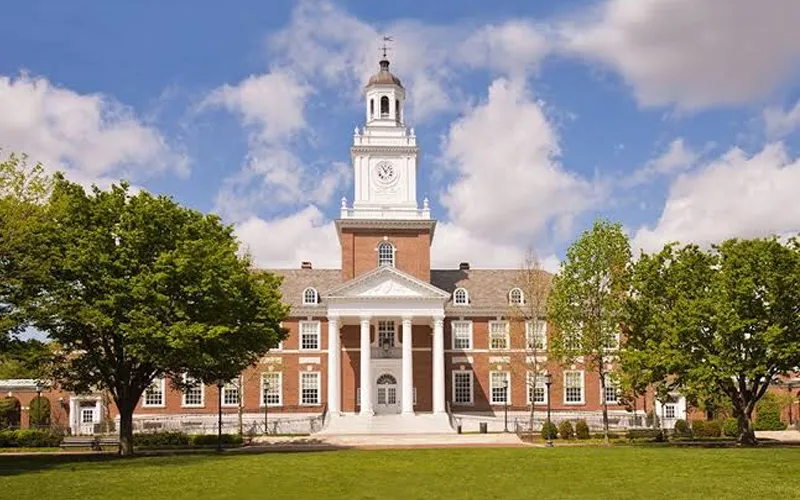
Johns Hopkins University is known for its strong academic programs, research-driven approach, innovative work, and emphasis on professional education. Located primarily in Baltimore, Maryland, the university has grown into a large academic institution with programs covering health professions, engineering, public health, medicine, nursing, business, education, international studies, arts, sciences, and music. According to the university, Johns Hopkins serves more than 30,000 full-time and part-time students across ten academic divisions and offers more than 400 programs.
Students exploring Johns Hopkins University degrees should know that the university offers multiple academic pathways rather than following one standard route for every student. The university brings together undergraduate majors, master’s programs, doctoral degrees, professional degrees, certificates, and combined programs. This means a student interested in computer science may follow a very different route from someone pursuing medicine, nursing, public health, international relations, or music.
Another important feature is the variety of academic divisions. Instead of treating every degree as part of one traditional college structure, Johns Hopkins organizes many programs through specialized schools and divisions. These include the Krieger School of Arts and Sciences, Whiting School of Engineering, Bloomberg School of Public Health, School of Medicine, School of Nursing, Carey Business School, School of Education, Peabody Institute, and the School of Advanced International Studies. Each has its own academic focus and, particularly at the graduate level, its own admissions requirements.
Quick Facts About Johns Hopkins University
| Information | Details |
| University | Johns Hopkins University |
| Location | Baltimore, Maryland, United States |
| Academic Divisions | Ten |
| Programs | More than 400 |
| Major Study Areas | Health, engineering, sciences, humanities, business, education, international studies, arts and music |
| Undergraduate Degrees | BA, BS, BM, BFA and related options |
| Graduate Degrees | Master’s, doctoral, and professional degrees |
| Nursing School | Johns Hopkins School of Nursing |
| Nursing Options | MSN, DNP, PhD, dual degrees, certificates |
| Academic Format | On-campus, online, hybrid, and professional options vary by program |
Johns Hopkins University Degrees Offered Across Academic Divisions
The range of programs at Johns Hopkins is one of the university’s defining characteristics. The official academic overview states that students can explore more than 400 programs across ten academic divisions. These programs cover health professions, arts and music, humanities, social and natural sciences, engineering, international studies, education, and business.

Krieger School of Arts and Sciences
The Krieger School of Arts and Sciences provides a broad academic environment covering humanities, social sciences, and natural sciences. Students can explore fields such as economics, biology, neuroscience, political science, history, philosophy, psychology, mathematics, and other disciplines.
For students who enjoy combining different areas of study, an arts and sciences education can provide considerable flexibility. Rather than preparing for only one specific profession, many programs develop analytical, research, communication, and problem-solving skills that can be applied to graduate school, research, public service, business, technology, education, and other careers.
Whiting School of Engineering
The Whiting School of Engineering is another major part of the university’s academic structure. Its programs cover areas such as biomedical engineering, computer science, electrical and computer engineering, mechanical engineering, chemical and biomolecular engineering, materials science, robotics, and other engineering disciplines.
Biomedical engineering is particularly connected to the university’s wider health and medical research environment. Students who want to combine technology with healthcare can pursue engineering studies while accessing the university’s broader expertise in medical research and health sciences.
Bloomberg School of Public Health
The Bloomberg School of Public Health focuses on population health and related scientific and policy disciplines. The school covers a broad range of public health disciplines, including epidemiology, biostatistics, environmental health, global health, mental health, health policy, and related areas of study.
Public health graduate programs can suit students who want to address health concerns on a broader scale, including community, national, and global populations rather than focusing solely on individual patients. The school also provides connections with other areas of Johns Hopkins, allowing students to approach healthcare from multiple perspectives.
School of Medicine
The Johns Hopkins School of Medicine provides education and training in medicine, biomedical sciences, and related healthcare fields.Its programs extend beyond the traditional medical degree and include graduate-level research and biomedical fields.
Students planning to pursue medicine should note that the MD is a professional qualification with admission requirements that differ from those of many other graduate-level programs.Research-oriented students may instead pursue doctoral or master’s education in biomedical and related sciences.
Carey Business School
The Carey Business School provides graduate business education in areas including management, business analytics, finance, marketing, and healthcare management. Students can choose from MBA pathways and specialized graduate programs designed to support a wide range of career interests and professional ambitions.
Business education can also overlap with other Johns Hopkins schools. For example, certain nursing and doctoral programs provide dual-degree opportunities that connect healthcare education with business training.
School of Education
The School of Education offers graduate-level opportunities connected to teaching, learning, counseling, leadership, special education, and other education-related areas. Its programs can serve teachers, administrators, counselors, researchers, and professionals seeking to develop expertise in education.
Peabody Institute
Students interested in music and performance can explore programs through the Peabody Institute. The institute offers degrees and programs connected to music performance, composition, education, and other artistic disciplines. Some students may also pursue combined educational pathways involving Peabody and other parts of Johns Hopkins.
School of Advanced International Studies
The School of Advanced International Studies, commonly known as SAIS, focuses on international affairs and related fields. Students can explore subjects such as international economics, public policy, global affairs, and regional studies. With locations and programs connected to Washington, D.C., Europe, and Asia, SAIS provides an international dimension within the larger university.
Johns Hopkins University Degrees Nursing: What Students Should Know
The search for Johns Hopkins University degrees nursing is particularly important because the Johns Hopkins School of Nursing has a distinctive structure. Unlike universities where nursing begins with a conventional undergraduate BSN, Johns Hopkins has a different pathway for students entering nursing without a previous nursing degree.
The School of Nursing provides several educational pathways, including the MSN Entry into Nursing program, other MSN options, DNP and PhD programs, dual-degree opportunities, online learning, and post-degree study.opportunities.
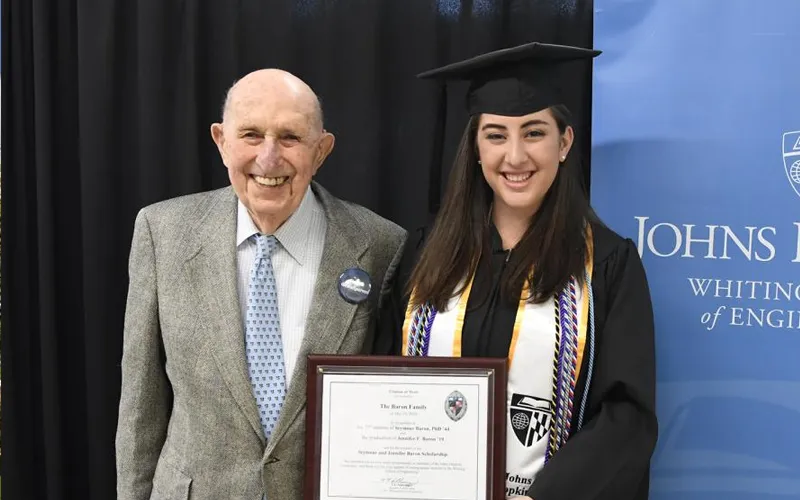
MSN Entry Into Nursing
One of the most notable options is the Master of Science in Nursing Entry into Nursing program. This pathway is designed for students who already have a bachelor’s degree in a field other than nursing and want to become registered nurses.
The program is therefore different from a traditional undergraduate nursing degree. Instead of starting nursing education immediately after high school, students first complete a bachelor’s degree in another discipline and then enter the graduate-level nursing pathway.
The School of Nursing explains that graduates of its MSN Entry into Nursing program can continue into additional nursing education, including DNP or PhD pathways.
MSN Healthcare Organizational Leadership
Students who are already nurses and want to move toward management, administration, leadership, or healthcare systems work can explore the MSN Healthcare Organizational Leadership program. The School of Nursing also provides a dual-degree option connecting this MSN pathway with an MBA.
This type of program illustrates how Johns Hopkins approaches professional education through different academic schools. Rather than treating nursing only as bedside clinical work, the curriculum can also connect nursing knowledge with leadership, healthcare delivery, management, and organizational decision-making.
DNP Advanced Practice
The Doctor of Nursing Practice Advanced Practice pathway is designed for nurses seeking advanced clinical roles. The current program includes tracks such as Adult-Gerontological Acute Care Nurse Practitioner, Adult-Gerontological Primary Care Nurse Practitioner, Family Primary Care Nurse Practitioner, Pediatric Primary Care Nurse Practitioner, Pediatric Dual Primary/Acute Care Nurse Practitioner, Psychiatric Mental Health Nurse Practitioner, and Nurse Anesthesia.
The DNP Advanced Practice program is structured with online coursework and required on-site immersions for many tracks, while the Nurse Anesthesia option has its own on-site structure. Requirements include appropriate nursing education, a nursing license, academic qualifications, recommendations, transcripts, a résumé or CV, and a goal statement, although individual tracks may have additional requirements.
DNP Post-Master’s
The School of Nursing also offers a DNP Post-Master’s pathway for experienced nurses who already hold a relevant master’s degree. The program has evolved from what was previously known as the DNP Executive Track.
The current program can be completed through online study with on-site immersions, and the school lists specializations including Leadership, Health Policy, Planetary Health, Nursing Education, Global Health, and Artificial Intelligence.
This pathway is particularly relevant for experienced nursing professionals who want to expand their leadership, policy, research translation, or healthcare improvement skills without entering a traditional entry-level nursing program.
PhD in Nursing
The Johns Hopkins PhD in Nursing is designed for students interested in nursing science and research. The focus is different from the DNP. A DNP emphasizes advanced professional practice, while a PhD focuses on developing and conducting research that contributes new knowledge to nursing and healthcare.
The School of Nursing currently offers both full-time and part-time PhD options. The university states that most full-time Johns Hopkins Nursing PhD students receive 100% tuition funding and guaranteed compensation for the first four years, while part-time students are self-funded.
The school also offers a DNP-to-PhD pathway for qualified students who want to move from advanced clinical practice into nursing research.
Johns Hopkins University Degrees Requirements
Understanding Johns Hopkins University degrees requirements is essential because admissions rules can vary substantially by school and degree level. There is no single checklist that accurately describes every program.
Undergraduate applicants and graduate applicants follow different admissions systems. Graduate programs can also establish their own academic prerequisites, testing policies, recommendation requirements, essays, interviews, and professional experience expectations.
Undergraduate Requirements
Students applying for undergraduate admission should review the current requirements provided by Johns Hopkins admissions rather than relying on general university admissions advice. Academic preparation, application materials, testing policies, recommendations, and deadlines can all affect the application process.
The university’s undergraduate structure gives students the opportunity to study across different fields, but individual majors can have additional considerations. Students interested in specialized areas should therefore research their intended major before submitting an application.
It is also important to distinguish admission requirements from recommendations. A university may recommend particular high school preparation without making every recommended course a formal admission prerequisite.
Graduate Requirements
Graduate requirements depend heavily on the academic division. A master’s program in engineering may have a different application process from a master’s program in education, public health, business, or nursing.
Applicants should generally expect to provide academic transcripts and program-specific application materials. Depending on the field, a résumé, statement of purpose, recommendations, test scores, professional experience, portfolio, interview, or other evidence may be requested.
The most reliable approach is to identify the exact program first and then review its official admissions page. This is especially important because testing policies and minimum academic standards can change over time.
Nursing Requirements
Nursing admissions have their own specific standards. For example, the DNP Advanced Practice program requires an appropriate nursing degree, a minimum scholastic GPA of 3.0 on a 4.0 scale, evidence of current nursing licensure, recommendations, official transcripts, a résumé or CV, and a goal statement. The school notes that GRE scores are accepted but not required for this program.
Requirements for the PhD are different. The current DNP-to-PhD pathway, for example, requires applicants to be graduates of an accredited DNP program, have research goals that align with faculty expertise and school resources, and meet the program’s academic requirements.
This demonstrates why students should not assume that requirements for one nursing degree automatically apply to another.
Are Johns Hopkins Degrees Available Online?
Some Johns Hopkins programs are available online, but online availability depends on the academic division and specific degree. The School of Nursing, for example, offers online options for certain programs, including MSN Healthcare Organizational Leadership and several DNP pathways.
Online education at a research university does not necessarily mean that every part of a program can be completed remotely. Nursing programs may require clinical experiences or on-site immersions, while other professional programs can have different attendance expectations.
For that reason, prospective students should look at the exact delivery format for their chosen program instead of assuming that a degree listed online is completely remote.
Frequently Asked Questions
1. What types of degree programs does Johns Hopkins University offer?
Johns Hopkins University offers a wide range of undergraduate, graduate, doctoral, and professional programs. Students can study subjects such as medicine, nursing, public health, engineering, business, education, international studies, arts, sciences, and music. The available options vary by academic division and level of study.
2. How many academic programs does Johns Hopkins University have?
The university offers hundreds of academic programs across its different schools and divisions. These programs cover both traditional academic fields and specialized professional areas, giving students many options depending on their career goals and educational background.
3. Does Johns Hopkins University offer undergraduate programs?
Yes, students can pursue undergraduate programs in several fields, including arts and sciences, engineering, and music. Undergraduate applicants generally need to meet the admission standards of their selected school and provide the required academic and application materials.
4. What are some popular Johns Hopkins University degrees?
Students can choose from programs related to public health, medicine, engineering, business, nursing, international studies, education, and the humanities and sciences. The right program depends on a student’s interests, previous education, and long-term career plans.
5. Does Johns Hopkins University offer nursing programs?
Yes, nursing is an important part of the university’s academic offerings through the Johns Hopkins School of Nursing. Students may find options at different levels, including master’s, doctoral, and research-focused programs. Admission requirements can vary depending on the specific nursing pathway.
6. What are the Johns Hopkins University degrees requirements?
Requirements depend on the school, program, and degree level. Undergraduate applicants may need academic records, standardized testing where applicable, recommendations, essays, and other application materials. Graduate and professional programs can have additional prerequisites, so applicants should check the requirements for their specific program.
7. Can students study Johns Hopkins programs online?
Some programs and courses are available through online or flexible learning formats, although availability depends on the academic division and specific program. Students interested in distance learning should review the individual program details to confirm delivery format, admission requirements, and course structure.
8. Where can students find detailed information about Johns Hopkins University degrees?
The official university and individual school websites provide detailed information about programs, admission criteria, tuition, curriculum, application deadlines, and other academic requirements. Checking the relevant school’s program page is especially useful because requirements can differ between departments and degree levels.
Final Thoughts on Johns Hopkins University Degrees
The range of Johns Hopkins University degrees reflects the university’s broad academic structure and research-focused identity. With more than 400 programs across ten academic divisions, students can explore undergraduate education, graduate study, professional degrees, doctoral research, certificates, and interdisciplinary pathways.
The nursing school is especially distinctive because it provides graduate-level entry into nursing for students who already hold a bachelor’s degree in another field, along with MSN, DNP, PhD, dual-degree, online, and post-degree opportunities.
At the same time, prospective students should remember that the university does not have one universal set of admission requirements for every program. Academic prerequisites, testing policies, recommendations, professional experience, clinical requirements, and application materials can vary by school and degree.
For anyone comparing Johns Hopkins University degrees, the most useful starting point is to identify the exact academic field and degree level first. From there, reviewing the official program page, admissions requirements, curriculum, study format, and current deadlines can provide a much clearer picture of what the program involves. This approach helps prospective students distinguish between general university information and the specific requirements that apply to the degree they actually want to pursue.
For more interesting stories and biographies, visit tend zore to explore more.