





Choosing new windows can completely change the comfort, appearance, and energy performance of a home. However, finding the best home windows is not simply about choosing the most expensive brand or the newest design. A good window needs to match the home’s climate, architecture, budget, glass requirements, and installation conditions. A window that performs well in a cold northern region may not be the right choice for a hot and sunny location, while a beautiful traditional wood window may Some homeowners may prefer options that involve less upkeep over time.
Table of Contents
- Understanding Window Frame Materials
- Vinyl Windows
- Fiberglass Windows
- Composite Windows
- Wood Windows
- Aluminum Windows
- A Guide to Selecting Home Windows
- Understanding Window Energy Ratings
- U-Factor
- Solar Heat Gain Coefficient
- Visible Transmittance
- Air Leakage
- Glass Technology Matters
- Best Window Styles for Different Homes
- Casement Windows
- Double-Hung Windows
- Sliding Windows
- Picture Windows
- Who Makes the Best Home Windows?
- Best Home Windows Replacement: Insert or Full-Frame?
- Best Home Windows for Noise Reduction
- Best Home Windows for Yakima, Washington
- Best Home Windows in Midland, Texas
- Best Home Windows 2026: What Has Changed?
- Clarifying the Windows Laptop 2026 Keyword
- How Much Should You Spend on New Windows?
- Installation Can Make or Break Window Performance
- Final Thoughts on Choosing the Best Home Windows
Today’s residential window market offers more choices than ever. Vinyl remains popular because it is affordable, energy efficient, and relatively easy to maintain. Fiberglass and composite materials have become attractive alternatives for homeowners who want stronger frames, slimmer profiles, and long-term durability. Wood continues to appeal to people who value traditional beauty, while modern aluminum designs are often selected for large architectural openings and contemporary homes.
The right decision also involves more than the frame. Glass packages, Low-E coatings, gas fills, pane count, air leakage, solar heat gain, and installation quality can have a major effect on performance. This guide explains the major factors homeowners should consider when comparing replacement windows, whether they are looking for the best home windows for the money, upgrading an older property, or planning a new construction project.
Quick Home Window Overview
| Feature | Details |
| Main Topic | Best Home Windows |
| Main Keyword | best home windows |
| Popular Materials | Vinyl, fiberglass, composite, wood, aluminum |
| Common Glass Choice | Double-pane Low-E glass with insulating gas |
| Premium Option | Fiberglass or composite |
| Budget-Friendly Option | High-quality vinyl |
| Noise Reduction | Laminated or asymmetric glass |
| Energy Efficiency | Low U-Factor and climate-appropriate SHGC |
| Important Factor | Professional installation |
| Ideal Approach | Match the window to climate, home design, and budget |
Understanding Window Frame Materials
Vinyl Windows
Vinyl is one of the most widely used materials for residential replacement windows. It is attractive to homeowners because it usually costs less than fiberglass, composite, or premium wood products. Modern vinyl frames can contain multiple internal chambers that improve insulation and structural performance.
Another advantage is low maintenance. Quality vinyl does not normally require regular painting or staining, and it handles moisture well. This makes it a practical choice for homeowners who want straightforward maintenance.
However, not every vinyl window is the same. Builder-grade products can differ considerably from higher-performance vinyl systems. Homeowners should compare the actual energy ratings, frame construction, glass package, warranty, and installation method instead of judging a window only by its material.
Fiberglass Windows
Fiberglass has become increasingly popular among homeowners looking for long-term durability. It is strong, stable, and suitable for large window openings. Because fiberglass can be designed with relatively slim frames, it can provide a modern appearance while allowing more visible glass.
Another advantage is its resistance to expansion and contraction. This can be useful in climates where temperatures change significantly throughout the year. Fiberglass can also be finished in different colors, making it suitable for contemporary homes as well as more traditional designs.
For homeowners willing to spend more upfront, fiberglass can be an attractive long-term option. The additional cost should still be compared against expected lifespan, energy performance, maintenance requirements, and installation quality.
Composite Windows
Composite windows combine different materials to create frames designed to provide strength and low maintenance. Some systems use wood fibers and polymers, while others use proprietary composite formulations.
Composite products can appeal to homeowners who want a more substantial frame than standard vinyl without moving completely into traditional wood construction. They are also available in a variety of colors and design options to complement different home styles.
When comparing composite products, it is important to look at the specific material used by the manufacturer rather than assuming every composite window has identical performance.
Wood Windows
Wood continues to be a favorite choice for its timeless beauty, organic texture, and classic appeal. It can be particularly attractive in historic homes, luxury properties, and houses where interior design is an important consideration.
The main drawback is maintenance. Exterior wood can require painting, staining, sealing, and inspection to protect it from moisture. Wood-clad products can reduce some of this maintenance by placing a protective exterior material over the wood.
For homeowners who value natural materials and classic design, wood remains an important option, but its maintenance requirements should be considered before purchase.
Aluminum Windows
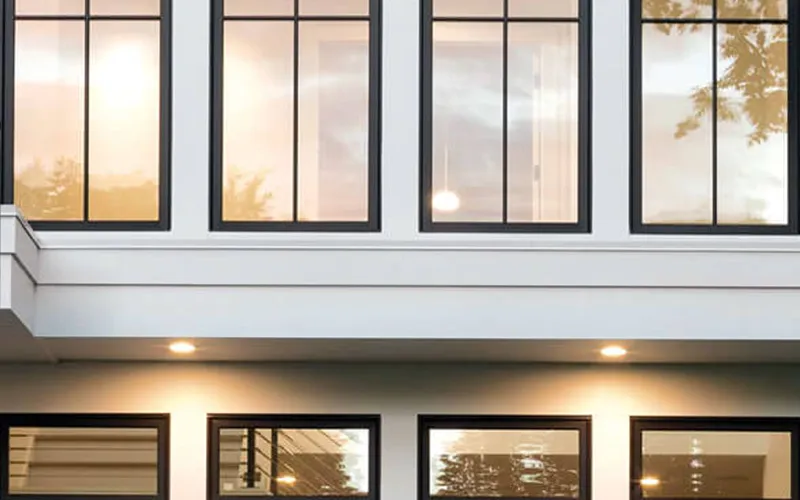
Aluminum is strong and can support large expanses of glass with relatively narrow frames. This makes it popular for modern architecture and large picture windows.
The weakness of standard aluminum is its ability to conduct heat. Modern aluminum systems can address this problem with thermal breaks and improved glazing, but homeowners should carefully examine the energy ratings before choosing aluminum for a residential project.
How to Choose the Best Home Windows
The question of how to choose best home windows becomes easier when you evaluate the project in stages. Start with the climate and the existing condition of the house. Next, consider frame material, glass technology, window style, and installation.
Climate is particularly important because the ideal glass configuration varies from one region to another. A homeowner in a cold area may prioritize a very low U-Factor, while someone in a hot climate may focus heavily on reducing solar heat gain.
The existing window openings also matter. If the old frames are structurally sound, an insert replacement may be possible. If there is rot, water damage, severe warping, or a desire to change the size of the opening, a full-frame replacement may make more sense.
Finally, compare several written quotes. A low initial price does not always represent the lowest long-term cost, and a premium price does not automatically guarantee better performance.
Understanding Window Energy Ratings
One of the easiest ways to compare different windows is to examine their energy-performance information. Homeowners should become familiar with U-Factor, Solar Heat Gain Coefficient, Visible Transmittance, and Air Leakage.
U-Factor
U-Factor measures how well a window resists heat transfer. Lower numbers generally indicate better insulating performance.
A low U-Factor can be particularly valuable in colder climates because it helps reduce heat escaping through the window. However, homeowners should consider the complete window assembly rather than focusing on one number alone.
Solar Heat Gain Coefficient
Solar Heat Gain Coefficient, commonly called SHGC, measures how much solar radiation enters through the window.
A lower SHGC can be beneficial in hot, sunny climates because it reduces unwanted solar heat entering the home. In colder climates, a somewhat higher SHGC may be desirable because sunlight can contribute useful passive heat.
This is why the same window specification should not automatically be used for every home.
Visible Transmittance
Visible Transmittance indicates how much visible light passes through the glass. Higher values generally allow more daylight into a room.
Homeowners who want bright interiors and large views should consider this rating alongside energy performance. Darker coatings or heavily tinted glass may reduce visible light even when they provide strong solar control.
Air Leakage
Air Leakage indicates how much air passes through the window assembly. Lower air leakage generally means a tighter window.
This measurement can be especially important in windy areas. A well-designed window with a strong seal can help reduce drafts and improve overall comfort.
Glass Technology Matters
The glass package can have a major influence on window performance. Modern windows commonly use insulated glass units with two or more panes separated by a spacer system.
Low-E coatings are among the most important technologies available. These microscopic coatings help control radiant heat while allowing useful daylight to enter. Different Low-E configurations are designed for different climates and exposure conditions.
Insulating gas is another common feature. Argon is widely used between panes because it can reduce heat transfer compared with ordinary air. Krypton can provide additional insulation in certain configurations, although its higher cost means it is not necessary for every project.
Triple-pane windows add another layer of glass and another insulating space. They can provide excellent thermal performance and may also help reduce outside noise. However, they are heavier and usually more expensive than standard double-pane systems.
Best Window Styles for Different Homes
Window style affects appearance, ventilation, operation, maintenance, and energy performance.
Casement Windows
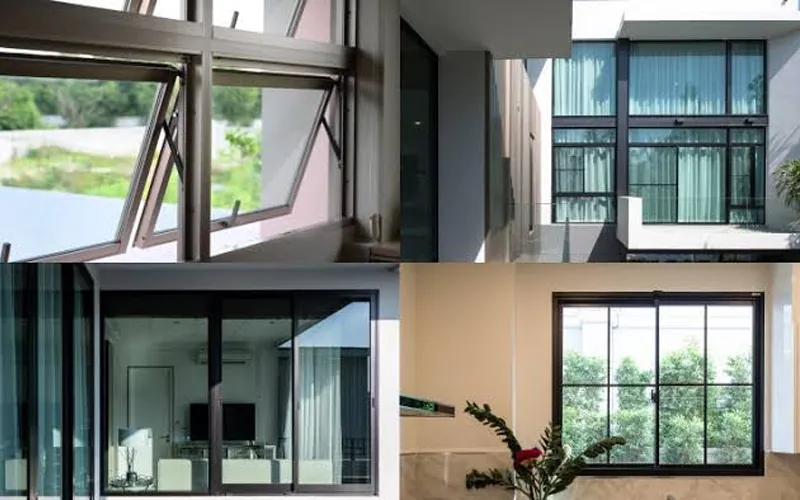
Casement windows open outward using a crank mechanism. When closed, the sash presses against the frame, creating a strong seal. This design can make casement windows a useful option for homeowners who prioritize ventilation and airtightness.
They also work well in modern homes because their frames can provide a clean appearance around large areas of glass.
Double-Hung Windows
Double-hung windows remain a popular choice for traditional and contemporary homes. Both the upper and lower sashes can move vertically, allowing flexible ventilation.
Many modern double-hung windows can tilt inward for easier cleaning. They are practical and familiar, although their moving design can create more potential air-leakage points than a fixed picture window.
Sliding Windows
Sliding windows move horizontally along a track. They can work well where vertical operation is inconvenient, such as behind countertops or furniture.
Their simple operation makes them practical for many rooms, although homeowners should inspect the quality of the tracks, weatherstripping, and locking system before buying.
Picture Windows
Picture windows do not open, which gives them an advantage in terms of airtightness. They are useful when the main goal is to maximize natural light and outdoor views.
Because there are fewer moving components, maintenance can also be relatively simple.
Who Makes the Best Home Windows?
The question of who makes the best home windows does not have one universal answer. Several established manufacturers offer different product lines designed for different budgets, architectural styles, and climates.
Andersen is widely known for offering vinyl, composite, and wood-based window systems across several product categories. Its Fibrex composite material is used in selected product lines and is designed to combine durability with low maintenance.
Marvin is strongly associated with fiberglass, wood, and premium architectural window systems. Its fiberglass products are often considered by homeowners seeking slim profiles, durability, and contemporary design.
Pella offers a broad range of materials and product categories. Its portfolio includes wood, fiberglass, and vinyl options, along with different glass and hardware configurations.
ProVia is another manufacturer worth considering when comparing high-performance vinyl products. Its product lines focus heavily on energy performance, construction quality, and customization.
Milgard has a strong presence in the western United States and offers vinyl, fiberglass, and other window solutions. Availability and product offerings can vary by market.
The important point is that brand reputation should be only one part of the decision. The exact product line, glass package, warranty, contractor, and installation method can matter just as much.
Best Home Windows Replacement: Insert or Full-Frame?
When considering the best home windows replacement approach, homeowners usually encounter two major installation methods: insert replacement and full-frame replacement.
Insert installation keeps the existing frame when it is structurally sound. The new window is installed inside the existing opening, which can reduce labor and preserve interior and exterior trim.
Full-frame replacement removes more of the existing window assembly. It can be appropriate when frames are damaged, rotted, poorly insulated, or incorrectly sized. It also provides an opportunity to inspect the surrounding wall area for moisture problems.
The right approach depends on the condition of the existing opening. A contractor should inspect the property before recommending one method.
Best Home Windows for Noise Reduction
Homeowners living near busy roads, airports, commercial areas, or noisy neighborhoods may have a different priority. In these situations, best home windows for noise reduction should be evaluated based on acoustic performance rather than simply the number of glass panes.
Laminated glass can help reduce sound transmission because an acoustic interlayer sits between glass layers. Asymmetric glass can also improve acoustic performance by using panes with different thicknesses that respond differently to sound frequencies.
Frame and installation quality are equally important. Even excellent acoustic glass cannot eliminate noise effectively if there are gaps around the frame.
Casement and other tightly sealing window styles may be useful where noise reduction is a priority. Homeowners should ask manufacturers or installers for tested acoustic ratings rather than relying on general marketing claims.
Best Home Windows for Yakima, Washington
People searching for best home windows Yakima WA need to consider the area’s combination of hot summers, cold winters, and changing weather conditions.
Energy performance is especially important because the window needs to handle both heating and cooling demands. A low U-Factor can help reduce winter heat loss, while an appropriate SHGC can help control summer solar gain.
Vinyl, fiberglass, and composite windows can all be considered for Yakima homes. Local availability, glass specifications, installation expertise, and warranty support should be compared before choosing a particular manufacturer.
For homeowners in the region, the most useful strategy is to ask local contractors for the actual NFRC ratings of the proposed windows rather than choosing solely based on brand name.
Best Home Windows in Midland, Texas
Homeowners searching for best home windows Midland or best home windows in Midland face a very different climate challenge. West Texas can experience intense summer heat, strong sunlight, wind, and dust.
In this environment, solar control is particularly important. A lower SHGC can help reduce the amount of solar heat entering the home, potentially reducing the workload placed on air conditioning.
Durable frame construction is also important. Homeowners should look for products designed for strong sunlight and temperature changes, while paying close attention to installation and perimeter sealing.
Rather than selecting a product simply because it is advertised as energy efficient, compare its U-Factor, SHGC, air leakage, glass configuration, and warranty.
Best Home Windows 2026: What Has Changed?
The best home windows 2026 discussions continue to focus on energy efficiency, durability, larger glass areas, better acoustic performance, and modern frame designs.
Homeowners are increasingly interested in windows that combine slim profiles with strong thermal performance. Fiberglass and composite products can support this trend because of their strength and dimensional stability.
Dark frame colors also remain popular in contemporary residential architecture. Black and deep neutral finishes can create strong visual contrast, although homeowners should check whether the selected product and finish are suitable for the local climate.
Energy standards and product specifications also continue to evolve. Instead of buying based on an old “best brand” list, consumers should examine the current product documentation and performance ratings for the exact window being quoted.
A Note About “Best Home Windows Laptop 2026”
The search phrase best home windows laptop 2026 refers to Windows laptops rather than residential windows. Although both topics contain the word “Windows,” they are completely different subjects.
If someone is researching laptops, they should evaluate processor performance, RAM, display quality, battery life, storage, operating system compatibility, and intended use. Those factors have nothing to do with choosing replacement windows for a house.
Keeping this distinction clear is important because search keywords can sometimes combine unrelated meanings of the same word.
How Much Should You Spend on New Windows?
The price of replacement windows can vary significantly depending on size, material, glass package, style, installation method, location, and labor.
A basic vinyl replacement may cost considerably less than a premium fiberglass or wood-clad product. Large custom windows, specialty shapes, triple-pane glass, acoustic packages, and custom colors can increase the total cost.
Instead of asking only for the price of each window, request a complete written estimate. The quote should clearly explain the product line, glass package, installation method, interior and exterior finishing, warranty, and any additional work.
This makes it much easier to compare two or three contractors without accidentally comparing completely different products.
Installation Can Make or Break Window Performance
One of the biggest mistakes homeowners make is spending heavily on the window while paying little attention to installation.
Correct measurement is essential. The opening needs to be prepared properly, flashing must be installed where appropriate, insulation should be used correctly, and the perimeter needs to be sealed carefully.
Homeowners should also ask whether the installer is trained or certified by the manufacturer. More importantly, they should obtain a written labor warranty that is separate from the manufacturer’s product warranty.
A manufacturer’s warranty may cover defective materials or glass, but installation-related problems can fall under the contractor’s responsibility. Understanding this difference before work begins can prevent confusion later.
Frequently Asked Questions
1. What are the best home windows for energy efficiency?
The best home windows for energy efficiency usually have good U-Factor and SHGC ratings, quality Low-E glass, and properly insulated frames. The ideal combination depends on your local climate and the home’s exposure to sunlight.
2. Which window material lasts the longest?
Fiberglass, composite, and well-maintained wood windows can offer long service lives. High-quality vinyl can also perform well for many years when properly installed and maintained. The actual lifespan depends on product quality, climate, installation, and maintenance.
3. Are vinyl windows a good choice for replacement projects?
Yes. Vinyl windows are popular because they are generally affordable, energy efficient, and require relatively little maintenance. However, homeowners should compare the construction, glass package, warranty, and performance ratings rather than choosing based on material alone.
4. How do I choose the right windows for my home?
Consider your climate, budget, architectural style, frame material, glass package, ventilation needs, and installation method. Energy ratings such as U-Factor and SHGC can help you compare products more accurately.
5. Are fiberglass windows better than vinyl windows?
Fiberglass can offer excellent strength, dimensional stability, and a slimmer appearance, while vinyl is often more budget-friendly and easier to maintain. The right choice depends on your priorities, project budget, and the specific products being compared.
6. What type of window is best for reducing outside noise?
Laminated glass, asymmetric glass thicknesses, and tightly sealed window designs can help reduce outside noise. Installation is also important because gaps around the frame can allow sound to enter even when the glass has good acoustic properties.
7. Should I choose double-pane or triple-pane windows?
Double-pane windows can provide strong energy performance for many homes, while triple-pane windows add another insulating layer and may offer improved thermal and acoustic performance. Triple-pane products are usually heavier and more expensive, so the additional cost should be considered.
8. Does professional installation matter when replacing windows?
Yes. Even high-quality windows can perform poorly if they are incorrectly measured, sealed, or installed. A qualified installer can help ensure the window fits properly and that flashing, insulation, and perimeter sealing are handled correctly.
Final Thoughts on Choosing the Best Home Windows
Finding the best home windows is really about finding the right combination of material, glass, style, energy performance, installation, and price. There is no single product that will be ideal for every house.
For budget-focused homeowners, quality vinyl can provide excellent value and low maintenance. Fiberglass and composite systems can be attractive for people who want stronger frames and modern architectural designs. Wood remains a compelling choice for traditional properties, while aluminum can work well for contemporary homes with large glass openings.
Climate should always influence the glass selection. Cold areas may benefit from lower U-Factors, while hot and sunny regions often need stronger solar control. Homes near busy roads may need laminated or asymmetric acoustic glass rather than simply adding more panes.
Most importantly, homeowners should compare the actual specifications of the window being quoted instead of relying only on a manufacturer’s reputation or a generic “best” list. A well-installed, properly specified window can provide better comfort, energy performance, and durability than an expensive product that is poorly matched to the property.
Whether you are comparing the best home windows for the price, researching replacement options, or trying to understand what are the best home windows for your climate, the same principle applies: choose based on the needs of your home first and the brand second. A thoughtful combination of efficient glass, a suitable frame, proper installation, and a reliable warranty can make a window replacement project much more worthwhile in the long run.
For more interesting stories and biographies, visit tend zore to explore more.