




Foam rolling has become a popular part of fitness and recovery routines because it gives people a simple way to care for tired and tight muscles without leaving home. Whether you work out often, sit for extended periods, or deal with everyday muscle tension, adding a foam roller to your routine can be a simple way to support relaxation and recovery. Foam rolling at home allows you to work on different muscle groups using controlled body weight and gentle pressure.
The idea behind foam rolling is closely connected with self-myofascial release, a technique that applies pressure to soft tissues to help reduce feelings of tightness. When used correctly, it may support flexibility, movement, and post-workout recovery. It is not a replacement for professional medical treatment, but for many healthy people, it can be a convenient recovery tool.
The best part is that you do not need an expensive home gym or complicated equipment. A suitable foam roller, a comfortable floor, and a few minutes of free time can be enough to create a simple recovery session. The key is learning how to use the roller slowly and safely rather than treating it like a piece of equipment that needs to be used with maximum pressure.
What Is Foam Rolling?
Foam rolling is a form of self-massage in which you use a cylindrical foam roller to apply pressure to muscles and surrounding soft tissue. Your body weight creates the pressure as you move over the roller. Some people use it before exercise as part of a warm-up, while others prefer it after training or later in the day when their muscles feel tense.
The sensation can range from comfortable pressure to mild tenderness, particularly when you move over an area that feels tight. Still, increasing the pressure or discomfort does not necessarily lead to better results.A useful session should be controlled, allowing you to breathe normally and relax rather than forcing your body through severe discomfort.
Foam rolling can be especially convenient for people who want a recovery routine that fits around their schedule. Instead of needing a massage appointment, you can spend several minutes working on commonly tight areas such as the upper back, glutes, thighs, and calves.
Quick Foam Rolling At Home Bio Table
| Topic | Details |
| Main Topic | Foam rolling at home |
| Technique | Self-myofascial release |
| Main Equipment | Foam roller |
| Common Targets | Back, glutes, thighs, calves |
| Typical Session | Around 5–15 minutes |
| Main Goal | Muscle relaxation and recovery support |
| Best Approach | Slow, controlled movements |
| Important Rule | Avoid bones, joints, and painful injured areas |
How to Start Foam Rolling at Home
Before beginning, choose a flat and stable surface where you have enough room to move. A yoga mat or exercise mat can make the experience more comfortable, especially if you are working on a hard floor. Your first sessions should focus on learning how much pressure feels appropriate.
Start with a slow pace. Moving too quickly makes it harder to notice how your muscles respond and may encourage you to put unnecessary pressure on sensitive areas. When you find a mildly tender area, slow down and breathe. You can pause briefly rather than repeatedly rolling over the same spot.
Your hands, feet, and other parts of your body can help control pressure. If a particular movement feels too intense, shift some of your weight away from the roller. With practice, you will become better at adjusting the position and pressure according to how your body feels.
Easy Exercises for Better Recovery
Upper Back Roll
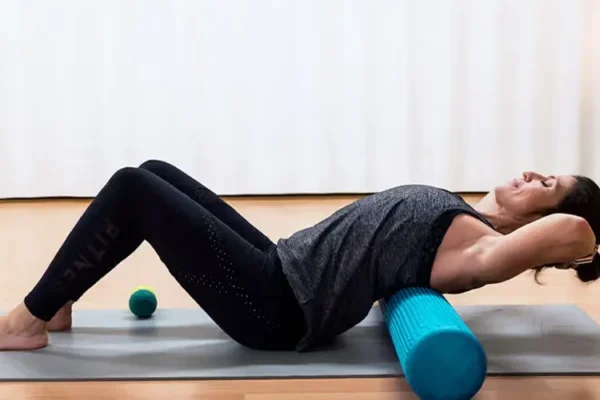
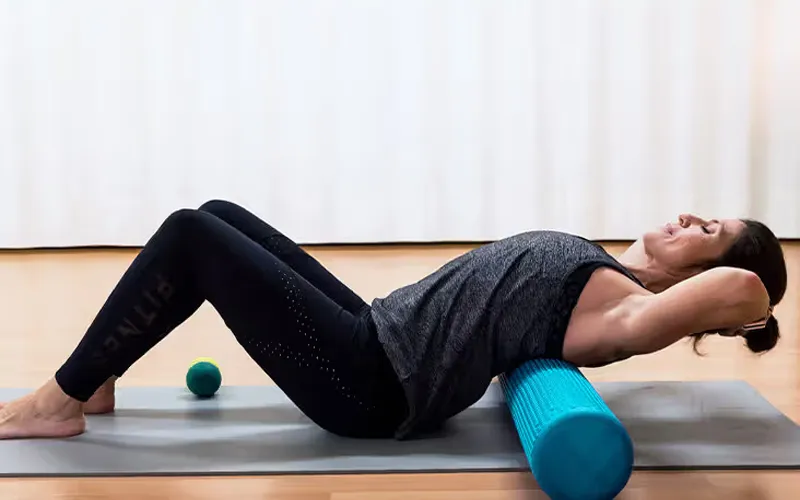
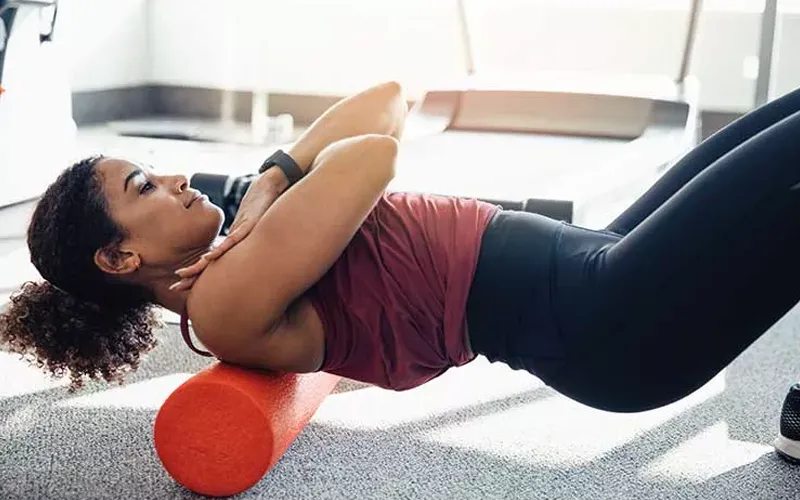
The upper back is one of the easiest areas to work with a foam roller and can be particularly useful after long periods of sitting. To begin, lie on your back and position the roller horizontally underneath your upper back. Bend your knees comfortably while keeping both feet firmly planted on the floor.
Support your head with your hands if needed and gently lift your hips. Use your legs to move your body slowly so the roller travels across the muscles of your upper and middle back. Keep the movement controlled and avoid rolling directly onto the neck.
This exercise can be a comfortable way to add movement to an area that often becomes stiff after working at a desk or spending time looking down at a phone.
Glute Roll
The glute muscles can become tight after running, strength training, cycling, or prolonged sitting. To work this area, sit on the roller with your knees bent and feet on the floor Position your hands behind your body to help maintain balance and stability.
You can cross one ankle over the opposite knee to place more attention on one side. Lean slightly toward the side you want to work and gently move backward and forward. Keep the pressure manageable and avoid placing direct pressure on bony areas.
This movement can be especially helpful when your hips and glutes feel tight after sitting for several hours.
Quadriceps Roll
The quadriceps are a major muscle group that runs along the front of your thighs.work hard during activities such as squats, lunges, running, cycling, and climbing stairs. Because of this, they can sometimes feel tired or tight after exercise.
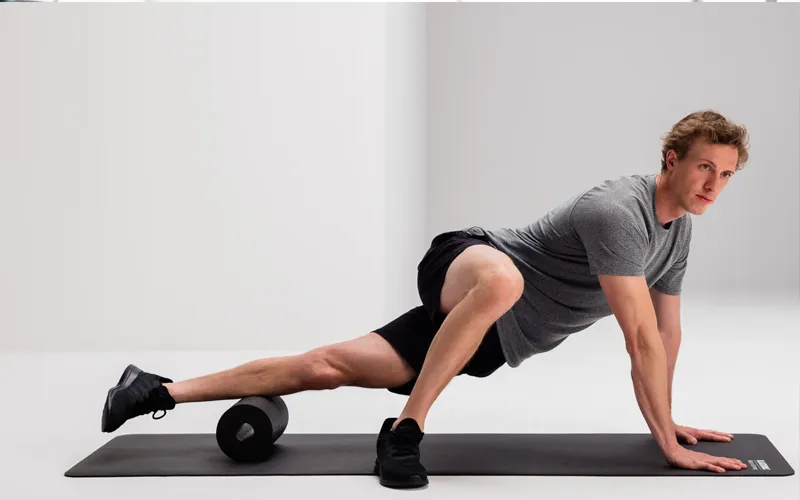
To roll them, lie face down and place the roller underneath your thighs. Support yourself with your forearms and keep your core gently engaged. Gently shift your body back and forth, allowing the roller to move along your thigh from just above the knee toward the hip.
Do not roll directly over the kneecap. Keep the pressure on the soft muscular tissue and reduce the amount of body weight placed on the roller if the sensation becomes uncomfortable.
Calf Roll
Your calves work throughout the day, even during simple activities such as walking and standing. They may become particularly tight after running, jumping, hiking, or other lower-body workouts.
Sit on the floor with your legs extended and place the roller underneath your calves. Put your hands behind you and use them to support your body as you lift your hips slightly. Slowly move backward and forward so the roller passes through the calf muscles.
If both legs together create too much pressure, keep one foot on the floor and roll one calf at a time. This gives you greater control and allows you to adjust the intensity more easily.
Hamstring Roll
The hamstrings are located along the back of the thighs and can become tight from exercise or prolonged sitting. Sit on the floor with the roller underneath the back of your thighs. Place your hands behind you and lift your hips slightly.
Move slowly from just above the back of your knees toward the lower part of your hips. Try not to rush through the movement. You can also rotate your leg slightly to explore different parts of the muscle, but avoid forcing any position that causes discomfort.
Foam Rolling for Women at Home
A woman foam rolling at home may use many of the same movements as anyone else because the basic principles of self-myofascial release do not depend on gender. The most useful approach is to choose exercises according to personal activity levels, muscle tightness, and comfort.
For example, someone who enjoys running may spend more time working on the calves, quadriceps, and glutes. Someone who works at a desk may prefer exercises that target the upper back, hips, and legs. The goal should not be to complete as many exercises as possible. Instead, focus on the areas that genuinely feel tight and respond well to gentle pressure.
Women who are pregnant, recovering from an injury, dealing with a medical condition, or experiencing unexplained pain should speak with an appropriate healthcare professional before starting a new recovery routine. Individual circumstances can affect which movements are suitable.
Common Foam Rolling Mistakes
One of the most common mistakes is moving too quickly. Fast rolling may make the exercise feel active, but it gives you less control over pressure. Slow movements are usually easier for beginners because they allow you to notice sensitive areas and change your position when necessary.
Another mistake is assuming that extreme pain means the roller is working better. Foam rolling should not feel like a punishment. Sharp, burning, radiating, or severe pain is a reason to stop rather than push harder.
You should also avoid rolling directly over joints and bones. Areas such as the knees, ankles, and spine require particular care. The roller should generally be used on muscular areas rather than directly on hard structures.
Rolling directly over an acute injury can also make the problem worse. If you have significant swelling, bruising, severe pain, or a recent injury, professional guidance is more appropriate than trying to treat the area yourself.
Should You Foam Roll Before or After Exercise?
The answer depends on your purpose. Some people enjoy gentle rolling before exercise because it helps them feel more mobile and prepared for movement. Others prefer using the roller after training as part of their recovery routine.
You can also use it separately from your workout. For example, a few minutes of gentle movement in the evening may feel comfortable after spending much of the day sitting. There is no requirement to use the roller at one specific time of day.
The important point is to combine it with a balanced approach to fitness. Warm-ups, strength training, mobility work, stretching, rest, hydration, and sleep all have their own roles. Foam rolling works best as one part of that bigger picture.
FAQs
1. What is foam rolling at home?
Foam rolling at home is a simple self-massage technique that uses a foam roller to apply controlled pressure to muscles and soft tissue. It can be included in a fitness or recovery routine.
2. How long should I use a foam roller?
A beginner can usually spend around 5 to 15 minutes using a foam roller. Slow, controlled movements are better than rushing through several muscle groups.
3. Can foam rolling help after exercise?
Yes, many people use foam rolling after workouts to relax muscles that feel tired or tight. It can be a convenient addition to other recovery habits such as stretching, rest, and hydration.
4. Can beginners try foam rolling at home?
Yes. Foam rolling at home can be suitable for beginners when they start with gentle pressure and learn how to control their body weight. There is no need to apply intense pressure to get started.
5. Which muscles can I target with a foam roller?
Common areas include the upper back, glutes, quadriceps, hamstrings, and calves. The roller should generally be placed on muscular areas rather than directly over bones or joints.
6. Should foam rolling be painful?
Foam rolling may sometimes feel mildly tender when you work over a tight muscle, but severe or sharp pain is not desirable. Reduce the pressure or stop if you experience unusual or intense discomfort.
7. Can I use a foam roller before exercising?
Yes. Some people use gentle rolling before exercise as part of their preparation. It should be combined with an appropriate warm-up rather than being treated as a complete replacement for warming up.
8. What should I avoid during foam rolling?
Avoid rolling directly over joints, bones, the neck, or an acute injury. If you have significant pain, swelling, bruising, or another concern, getting professional advice is safer than trying to treat the area yourself. Foam rolling at home should always be comfortable and controlled.
Final Thoughts
Foam rolling at home can be a simple and affordable way to add self-care to your fitness routine. With a basic roller and a few minutes of time, you can work on commonly tight areas such as the upper back, glutes, quadriceps, hamstrings, and calves. The process does not need to be complicated, and beginners can start with gentle pressure before gradually becoming more comfortable with the technique.
The most important lesson is to listen to your body. Slow movements, controlled pressure, relaxed breathing, and proper positioning can make the experience much more comfortable. Avoid bones, joints, injured areas, and any movement that causes sharp or unusual pain.
Whether you are an active athlete or someone who simply wants to feel less stiff after a long day, a thoughtful home routine can be a useful addition to your lifestyle. When combined with regular exercise, good recovery habits, and appropriate professional care when needed, foam rolling can become a practical part of maintaining comfortable movement and supporting your recovery.
For more interesting stories and biographies, visit tend zore to explore more.